
Senate Report Warns of Immigration Agent Abuse Against U.S. Citizens
This report by Venture Hive, an independent news organization, provides investigative journalism and in-depth analysis on major political developments shaping the United States.

The Senate Permanent Subcommittee on Investigations released a detailed 200-page report this week, warning that federal immigration agents have committed abuse against U.S. citizens through unlawful detentions. Venture Hive reports that these warnings highlight systemic issues in immigration enforcement and calls for reform.
The Senate Permanent Subcommittee on Investigations released a detailed 200-page report this week outlining more than two dozen incidents where U.S. citizens said they were detained by federal immigration officials despite presenting valid identification and proof of citizenship. The findings challenge statements from Homeland Security leadership asserting that U.S. citizens are not subject to immigration arrests, revealing instead that citizens were held for hours or days under aggressive and unstandardized procedures. According to lawmakers involved in the investigation, the pattern of conduct documented in the report suggests systemic issues within enforcement practices that run counter to constitutional protections guaranteed to citizens of the United States.
Senator Richard Blumenthal, ranking member of the subcommittee, has been one of the most vocal critics of the conduct documented in the report. During a public forum held concurrently with the report’s release, Blumenthal described accounts from citizens who were stopped at home, at work, or on the street by agents who were often in plain clothes or masked, making it difficult for those individuals to understand which authority was detaining them. Witnesses included an Army veteran who said he was held in a hospital gown on suicide watch for days after declaring his citizenship, and a Southern California resident who testified that agents failed to acknowledge her status even after she repeatedly presented her passport.
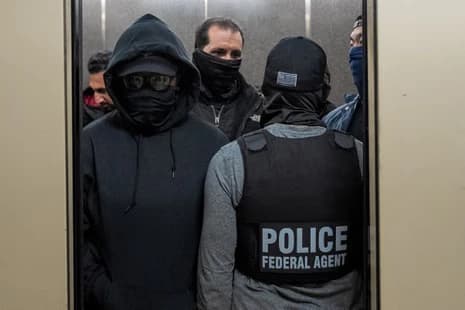
The study indicated that immigration authorities used more force than witnesses thought was needed to retain persons in several scenarios. A woman from Chicago reported that the police yanked her out of her car, while another person said that the cops used chemicals and force when she tried to film what they were doing. Some of the people who were arrested stated they were not allowed to talk to a lawyer or family members right away. This made them even more angry and bewildered. The subcommittee's investigators put these personal accounts together with other interviews and remarks to back up their accusations that there was too much force used and that things were done wrong.
The Senate report also talked about concerns about how people who were weak were treated while they were in jail. Some of the people who were interviewed were older. For example, there was a 79-year-old man with a heart stent and a pregnant woman who said she was often forced to do things even though she was pregnant. Some people say that officials ignored or rejected clear proof of citizenship, kept people for days, and then defended their actions with false accusations of assault or obstruction. Witnesses said that when they were held for a long time, police sometimes didn't give them basic needs like water or medical care. People who support the study say that this is a violation of basic human rights.
Some people who don't like how the Trump administration enforces immigration rules argue that the inquiry demonstrates that groups like Immigration and Customs Enforcement (ICE) and Customs and Border Protection (CBP) are operating more like paramilitary groups. They believe that immigration enforcement is less obvious and accountable now since agents utilize severe ways to halt people, drive unmarked automobiles, and use disguises. Some people who care about civil rights have warned that this form of policing is like secret ways that could make people less likely to trust the police. People say that incidents like this could make people less likely to help the police in general.
The subcommittee's investigation found not only cases of force but also cases of alleged profiling based on race or ethnicity. A number of detainees said they were stopped and held even though there was no proof that they had done anything wrong. Agents are said to have made assumptions based on how the detainees looked or spoke. People who support immigrants' rights say that these trends show that immigration enforcement needs to change how it deals with regular people, especially in cities with a lot of different cultures. The people who wrote the report said that agents need better training and clearer rules to make sure that constitutional rights are protected in all of their work.
After the study came out, some lawmakers said that immigration policy needed to change quickly and that the federal government needed to pay more attention to how immigration works. Some of the suggestions are that police should clearly identify themselves when they arrest someone, that independent boards should look into complaints from citizens, and that body cameras should be used to keep accurate records of arrests. Civil liberties groups have said similar things, stressing that we need ways to hold people accountable so that people can trust federal law enforcement again and stay safe from unfair or random actions.
Officials from the Department of Homeland Security have publicly disagreed with some of the report's conclusions. They have said again and again that U.S. citizens are not targeted for immigration detentions and that agents follow the law. But the subcommittee's papers directly refute these claims by providing firsthand accounts and video evidence in some cases. Members of both parties were worried about the gap between what officials said and what residents had actually gone through. Some Republicans agreed with Democrats that there should be more investigation.
The report's results come at a time when immigration enforcement policy is still a very controversial topic in American politics. As the 2026 midterm elections get closer, the debate over how to protect civil liberties and border security is getting more heated. Experts say that the subcommittee's work could have an impact on future laws about protecting civil rights, immigration reform, and making sure that law enforcement is held accountable. Some civil rights lawyers believe that the study will lead to lawsuits and other actions to stop what they call federal immigration agents going too far.
The folks whose tales are in the study have a rare chance to tell about things that most people think should never happen in the US. Their proof raises wider questions about how the police work in the US, such as the loss of civil rights and the abuse of power. As more people read the report and lawmakers call for reforms, it will definitely be a key part of the argument about how to safeguard people's constitutional rights while also keeping the public secure through immigration policy and enforcement.
Why the Senate Report on Immigration Abuses Matters
The Senate study says that the way federal immigration officials enforce the law may have violated people's constitutional rights. This makes it hard to tell who is in charge and how they are being watched. The comments show that immigrants need better protection and clearer rules about how to treat them during immigration operations. Lawmakers think that the documented cases show that the people who are supposed to enforce immigration laws are not doing a good job. It seems like these mistakes are more than just one-time things; they happen all the time. The study also says that these kinds of abuses could keep happening if nothing changes, which would make people trust the government even less. Experts say that the results show how important it is to improve training, make rules clearer, and make it easier for federal agencies and local communities to work together.
Lawmakers and civil rights groups say that the results could have an effect on future discussions about civil rights and immigration enforcement. The research shows patterns of alleged wrongdoing that could help efforts to change how the federal government works and protect the rights of everyone living in the US. People who want change think that the study gives lawmakers a good place to start when they make rules to limit enforcement powers and add more oversight. They also say that the investigation could change how Congress talks about immigration policy in the future, especially as more people across the country worry about due process and equal protection. In the end, the results could help create new ways to hold people accountable that will stop them from abusing their power and make sure that law enforcement stays within the Constitution.
• Related Posts
• POPULAR ARTICLES
Grand Jury Rejects Mortgage Fraud Case Against Letitia James
05 Dec, 2025 • POLITICS
Honeyjar AI Secures $2M Pre-Seed for PR Automation Platform
10 Dec, 2025 • BUSINESS

Tampa Bay Rays Sign Cedric Mullins to One-Year Deal
16 Dec, 2025 • SPORTS

Why Darden’s Ranking Matters for Entrepreneurship
09 Dec, 2025 • OPINION

NY Attorney General Challenges Federal Prosecutor Legitimacy
12 Dec, 2025 • INVESTIGATION
• SEARCH
• TRENDING


Supreme Court Allows Texas to Use GOP-Favored Congressional ...
05 Dec, 2025

Nexus Venture Partners Raises $700 Million for Early-Stage S...
05 Dec, 2025

Julio Herrera Velutini: Bridging Nations Through Finance in ...
14 December 2025